Division from tunnel vision
Here’s a poem that came to my mind at 7 am the morning the week before Black Friday. I mistakenly thought that it was Black Friday, likely because it’s been screamed at me for the past couple of weeks. But I decided that it’s probably better to post this now. Almost as a gentle reminder. The poem is called Division from tunnel vision.
Having written this poem, I wanted to write a few words explaining what some of it means - that is, where these thoughts came from and what their true meaning is. I’ll go verse by verse to make it easier for you to follow.
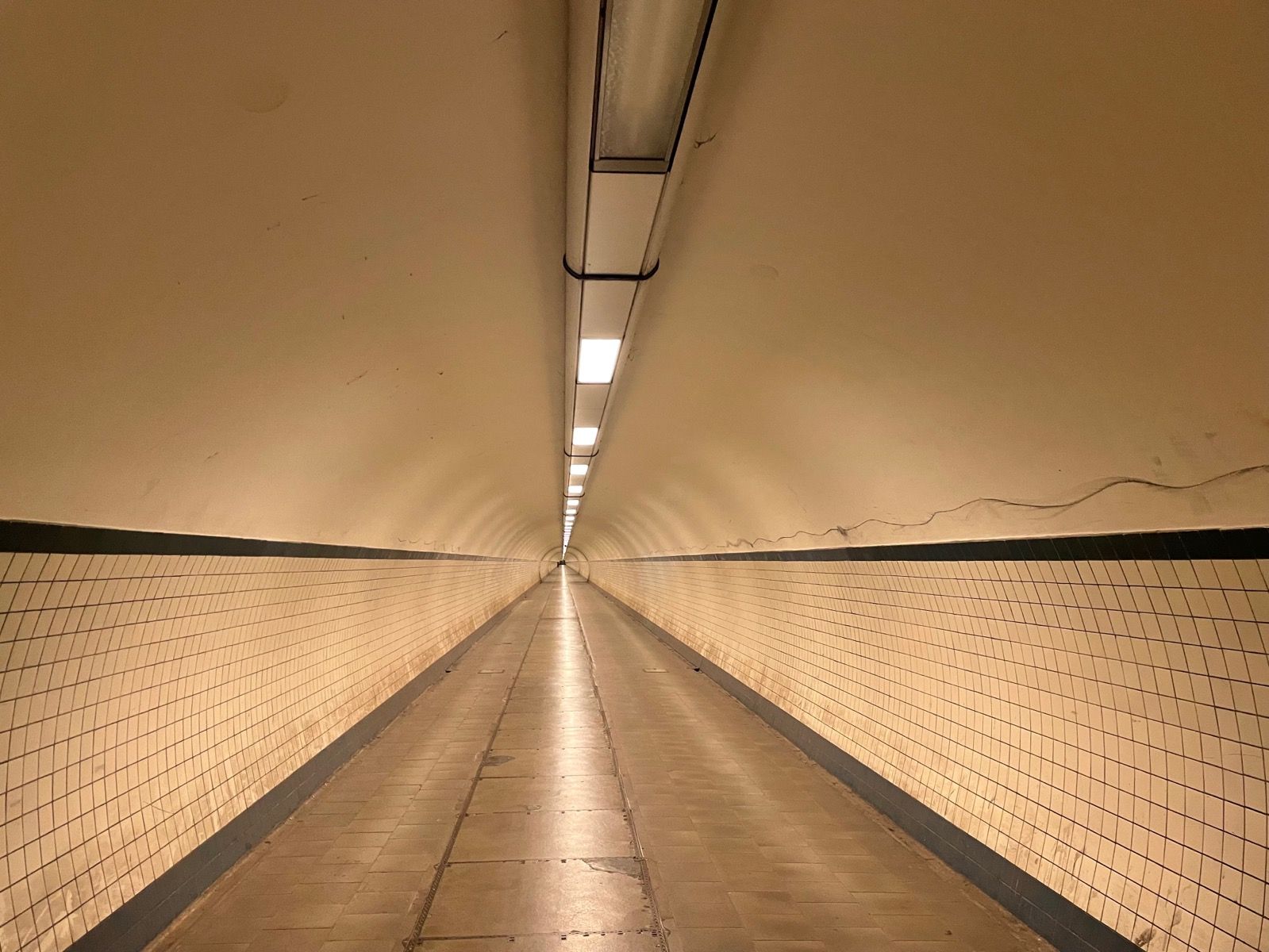
The poem was inspired by it being Black Friday next week and the fact that this day, that happens once a year, is the epitome of overconsumption - of aggressive marketing, feeding the corporate machine of planned obsolescence. Having opened my eyes to the destruction that our excessive consumption is causing to this planet - both the people and nature that inhabit it - I remember watching something on television. It was a video of people rushing into a shop when it opened on the morning of Black Friday. It struck me just how tunnel-visioned we are becoming as individuals and also collectively as a society. In this context, tunnel vision applies both literally and metaphorically. Literally, people have their vision glued to the entrance of the shop, waiting for the doors to open, and once in, they’re vision is tunneled towards the things that jump out at them the most. The items with the largest discount, or the cheapest bit of clothing. Momentarily, we turn into animals of consumption, thinking irrationally, working for short-term reward and gratification. Our vision is tunnelled in the here and now, with no regard about the past or future of the product that we’re consuming. This links to the metaphorical aspect of our tunnel vision. We’ve become blind to the true cost of our consumerism and overconsumption. We either don’t realise the destruction that buying a cheap item that’s made to break is causing to the world, or perhaps even worse, we choose to play the card of ignorance is bliss. Choosing to ignore the externalised costs of our actions. On Black Friday, due to overly aggressive marketing from companies whose sole objective is profit maximisation at all costs, we’re lured into buying more things that we don’t need. We’re brainwashed into thinking that we need that thing to fill this void in our lives. Instead of taking a step back and realising the serious implications of our actions, we choose to keep blindly purchasing - ignoring, for example, the fact that this t-shirt we are buying for £5 was made in a factory in a third-world country where exploitation and child labour are the norm. But this issue is not simply unique on Black Friday. It’s an issue every other day of the year, too. Collectively, as a society, we’re like bees in a hive. We choose to insulate ourselves from the true cost of our behaviours in the belief that what we’re chasing are the fruits of life. And just like the buzzing of bees in a hive, big corporations succeed in creating a persistent cloud of marketing around us, making us think that we need that new thing. Black Friday, for me, simply acts as a day to illustrate the extent and seriousness of this issue. It’s no different to any other day, really. As soon as we realise and accept this, then we can start working towards creating a better society.
But what’s the issue? It seems as if it’s such a great deal, I just can’t help myself but buy it. You see, when we’re prisoners to the consumption wheel, then psychologically, the brain plays some tricks with us. Because we’ve been lured into playing the game that big corporations want us to play, we’re - at no fault of our own - always craving that next purchase to give us that dopamine kick that we feel momentarily sorts out our problems. But the truth is, we’re just creating a whole load - I mean, a lot - of other problems. These deals that we see aren’t real. Any deal for us means ordeal for someone else. And, to add salt to the wound, the ordeal caused to others - be it vulnerable communities in third world countries, or the fish in the ocean - never changes. In essence, Black Friday is a day where we pay less to cause the same amount of destruction to the Earth that we live on. And to make matters worse, Black Friday only results in people buying even more things that they don’t need. The true deal is this: it’s cheaper for us to cause the same amount of destruction; to ecosystems, society, and all that helps sustain the planet. Doesn’t this just sum up consumption?
So what can we do? We must open the curtain that is the million-dollar marketing campaigns of destructive companies and start questioning the status quo that’s so detrimental to all life on Earth. We must realise that it’s in these companies’ best interest - in fact, it’s often their only interest - to sell us as much of their products as they possibly can, irrespective of any downstream or upstream repercussion. The truth is that we’re deluded to think that buying these things, especially if they are on deal, will improve our lives. But I’m sure we can all agree that the vast majority of things that we buy aren’t truly necessary - they’re burdens disguised as luxuries. Without a doubt, our relentless overconsumption is only catalysing ecological collapse, the climate emergency, poverty, malnourishment, healthcare issues and any other issue under the sun, really.
You see, there is no infinite resource on this planet. Everything is finite. Just like we have budgets for our weekly food shop, the planet and everyone that inhabits it also have their own budgets. And these aren’t always in the fiscal sense. We’ve already pushed the planet towards ecological collapse, and we’re now seeing the catastrophic effects of extremes caused by climate change on vulnerable communities all over the world, but also closer to home. Consider the recent floods around a week ago in the UK, for example. We have not the capacity to cope with much more. The systems that have sustained us for so long, whilst we kept ignorantly ploughing on, are on the verge of collapse. Our budget is nearing its end. Even on an individual level, if we consider only the financial side, any deal that we think we’re getting is not truly a deal. First of all, what’s cheaper? Buying something that’s 50% off, or not buying it at all? The latter, of course. Secondly, everyone has heard of the saying ‘buy cheap, buy twice’. This is an old saying that’s only becoming of greater relevance these days. Manufacturing methods have become cheaper and cheaper, but this is at the expense of quality. Hence, when we think we’re getting a good deal buying those trousers for £10, we’re often shooting ourselves in the foot. We’d be better off buying a pair that will last 10 times as long for £50. Or, if finances are tight, buying a higher quality pair at a second-hand shop. By ‘chain’, I am referring to the long supply chain that’s hidden from the consumer. This is done intentionally. These companies do not want us to know what goes on at either end of the supply chain. Be it slave labour in sweat shops, to literal mountains of waste going to landfill or ‘donated’ to a third world country - the stuff either side of the purchase is the most important stuff in the supply chain. This is what I mean by the true cost of anything that we buy. Personally, I can no longer buy anything without thinking about the downstream or upstream repercussions of my consumption - and I’m happy about this. I’m happy about this because it means that I have stopped being ignorant about the true impact of my actions. Every single one of us should wake up and start thinking about the true cost of what we consume. To really think. To educate ourselves so that we can start moving towards a better world, a better society.
So what needs to change? As I’ve mentioned, we need to wake up and admit to the destruction that our consumption habits are causing. The first step to this is to really start feeling. Putting ourselves in the shoes of the people right at the start and the end of these long supply chains. To stop being a culprit of manipulative marketing and to know that we have agency to make change. To know that if we stop overconsuming, then the world will become a fairer, cleaner, happier place.
I propose using this Black Friday to remind us of all that I have mentioned above. To remind us that this place that we call our home - the Earth - is burning and that people all over the world are suffering as a result of issues such as overconsumption.
I want to see a society that’s connected. One in which people work together to create communities whose value is not solely determined by their material assets or wealth. Whose value is instead measured by the connections that are present - with others and with nature. Especially this next Friday, I urge you to get out of your comfort zone and to act like a citizen, not a consumer. Go on a walk with your friends or family. Make something that you’ve been meaning to make for a while. Repair that item of clothing that you’ve been putting off repairing for some time. Go to your local library. Volunteer your time to a good cause. Or even just sit outside observing nature. Do anything but passively overconsume. It will make you feel good. You’ll realise that our collective consciousness has been tinkered with by these large corporations. You’ll realise, if you step away from the screens, the marketing, and the constant noise, that life really is beautiful just as it is. That those things you used to do as a child are still there, it’s just we’ve been blinded our whole life. Take off your costume - again, both literally and metaphorically. We’re more than what we wear. It’s what’s inside that counts. Not how we dress. Not how many possessions we have. We must start connecting with nature and others to address the division so clearly apparent in our present society. Division from those that are close to home, but also division from those across the world. Whether we like it or not, every single action that we take has some impact on the world that we live in, no matter how small. So let’s take positive action this Black Friday. Let’s choose to be citizens. Let’s choose Citizen Friday.
Explore more like this
A goal's goal
What is the goal of a goal? Can a goal even have a goal? It’s been over half a year now since I ditched my running watch in an attempt...