Tranquil Tokushima
From sleeping beside ancient temples to rolling along jagged cliffsides, the Shikoku Henro was certainly an exciting journey. Having been back in Wales for a week, I wanted to sit down and start writing up about this trip of a lifetime. Initially, I’d planned on keeping a detailed diary along the way; however, I soon decided that the diary formed in my memory would suffice. That way, when recollecting the journey, the things that impacted me and stuck with me would surface organically to create a shortened narrative, but one not lacking in depth. The few things that I did write in my diary, along with the pictures that I took along the way, will help form the skeleton of my writing. However, before I discuss my pilgrimage, it may be useful to roll back the clock a few months.
At the start of the year, I decided that I’d like to slow things down a little. Instead of jumping into another running training block, I wanted to make the most of my time between jobs to do something different. This coincided with a time in my life where my interest in spirituality was increasing, particularly aspects of the Buddhist philosophy. I’d attended a 10-day Vipassana silent meditation a couple of months prior, and had spent much time meditating, given that I was sidelined from running with an ankle sprain. The Vipassana, in hindsight, was nothing short of life-changing, and I now felt like I understood the power of observing the mind. This realisation moved me away from the naïve mentality that the best way of developing the mind is to undergo difficult challenges - running ultramarathons, reading many books, walking very far. I realised that the physical is merely a manifestation of the mental and, therefore, the former can only get you so far without developing and nurturing the latter. I began to wonder why we often devote so much time and energy to exerting ourselves physically, often entirely neglecting our minds, especially in the world of running. I started viewing things as a continuum between the mental and physical, as a sliding scale between different states. On one side of the scale, there’s the purely mental, or at least from a naïve standpoint. Stereotypical meditation, where one sits cross-legged with their eyes shut, might fall here. On the other side of the scale lies the purely physical. Again, from the naïve standpoint, this may be deadlifting a heavy weight. Then there are things that fall in between these, like running ultramarathons, for example. What I realised, however, is that any physical exertion is simply a manifestation of the mind, so I started to wonder why I pay far less attention to the sensitive mind than the superficial physical. I decided that, despite being a continuum scale, true physical self-transcendence can only be accessed if one patiently works on developing the mind. So, leading up to my next race in September, I decided that I wanted to explore my mind’s untapped potential.
With this in mind (no pun intended), I decided that I wanted to go on a pilgrimage. Specifically, one on foot. The primary goal being to become a better person and to help further dissolve the ego, something I believe is at the root of much of the turmoil I’ve experienced during my life. This seemed like a good sweet spot on the continuum scale, as I’d be able to meditate while walking, which itself is a physical act. My hope was that this would allow me to notice the interplay and synergy between the mind and body experientially, not just by reading texts and books that simply act to accumulate surface-level knowledge instead of wisdom. Regardless, I’d been thinking of going on a long-distance hike for some time, so I started looking for pilgrimages that I could do on foot that would take around two months to complete. This helped constrain my options, and I soon stumbled upon a National Geographic article mentioning a pilgrimage in Japan called the Shikoku Henro. A “spiritual lift” sounded like exactly what I needed, and the route seemed cool - a journey on foot circumnavigating the smallest of the four main Japanese islands, visiting 88 Shingon Buddhism temples along the way. Having started digging into more information about the pilgrimage, I realised that it was quite an esoteric thing to do, with Shingon itself being a school of Japanese Esoteric Buddhism. I was still unsure, however, as I avoid flying wherever possible, and having checked the price of the trans-Siberian railway, which was nearly £15,000 one-way, I’d have no option but to fly. Perhaps I should settle on one of the Caminos instead? But after calling a close friend to discuss my options, I decided to press ahead. I knew that the culture would be nothing like I was used to, having never travelled outside of Europe. I knew that this would be a trip of a lifetime. Flights booked, I was excited to leave in a couple of months’ time.
Before heading out to Japan, I needed to make sure that I had everything I needed for a long distance hike. Aiming to consume as little as possible, I first checked what I already had. Then, anything else that I didn’t have, I bought second hand or from ethical outdoor brands. I planned on carrying the bare minimum, with a part of the pilgrimage being about surviving with less, relying less on the external to facilitate tapping into the internal. However, I expected it to still be cold at night when I arrived in Japan, so I wanted to make sure that I would be warm enough when sleeping. I’d also heard that when it rained in Japan, it rained, so I took a waterproof coat and trousers to stay dry. Having made sure that I had everything I needed, spending far too much time getting caught up in petty details about kit, I was ready to head to Japan. But there was one last important thing to buy before heading out - the guidebook for the pilgrimage. I planned to rely as little as possible on navigating using my phone, having been running and walking without a GPS watch since last August, as part of a project that I’ve started called joyrun. This meant that the maps in the guidebook would be my primary way of navigating the island. To aid with this, I also took the time to listen to a great foundational Japanese audiobook so that I could at least converse a little with the locals when lost. Learning a new language was fun and turned out to be a very worthwhile investment.
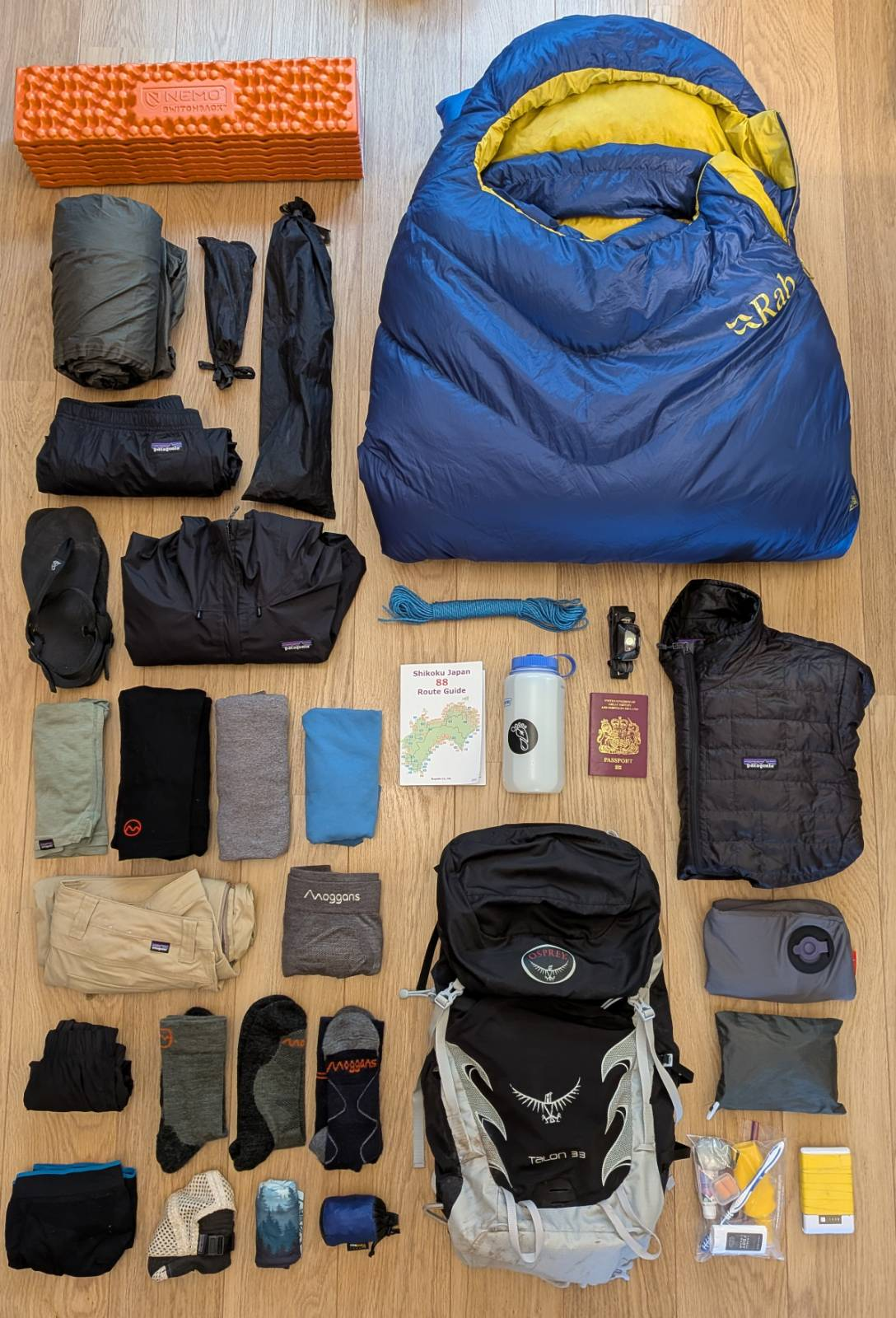
For those interested in what I packed, everything I took is shown in the photo below. To sleep, I had a sleeping mat, bag and pillow, a tent, a pair of clean socks, and full merino thermals. To walk, I had convertible trousers, running shorts, two pairs of socks and pants, a cap, a buff, a puffer coat, and full waterproofs. Then I carried a packable bag, some rope, a headtorch, a bottle, a toothbrush, toothpaste and floss, a power bank, a passport, a repair kit for my tent, a guide book, and a bag to put everything into. The only other things not shown in the picture are my notebook to write stuff down in and my shoes, which were the Norda 002s. I never like mentioning bits of kit, but these deserve a mention as they lasted 2000+ km of walking with 8-10 kg of weight on my back.
Early in the morning on the 9th of March, 2026, I headed to the train station to catch a train to the airport. It felt freeing to know that I had everything that I needed to live on my back, including a house! I’d wanted to do something like this for quite some time, and now it was actually happening. I arrived at the airport early and sat there people watching for a couple of hours. I don’t think I’ll ever enjoy being in airports again, as I find myself thinking about all of the flights arriving and departing, polluting and destroying the habitability of our planet. I felt like a huge hypocrite, but rationalised the action to myself in my mind, this being my one flight of the year, just like the three previous years.
Landing in Japan, I found the bus ticket office and, after initially buying the wrong ticket, I bought a ticket to Tokushima on the island of Shikoku, where the first temple on the pilgrimage, Ryōzen-ji, was. Waiting for the bus, I saw a young couple that looked like the only reason they were waiting for the same bus as me was to head to the start of the Henro. Perhaps there would be more Western people hiking than I thought?
Interestingly, the Shikoku Henro has no real ‘rules’, unlike other long-distance pilgrimages like the Caminos. People can undertake it in whatever way works best for them - driving between temples in a car, cycling, taking weekend trips to complete the pilgrimage over a few years, and anything in between. But a small number of people choose to walk the entire way continuously, visiting the 88 temples in numerical order. This is the more traditional way of completing the pilgrimage and, in the view of many, the best way, as it allows for deeper immersion in nature and the island’s culture. Since I had the time, I also planned to visit the 20 additional Bakkaku temples along the way, which would add a couple of hundred kilometers to my walk but, more importantly, allow me to explore more of Shikoku, with these temples often residing in more remote regions of the island.
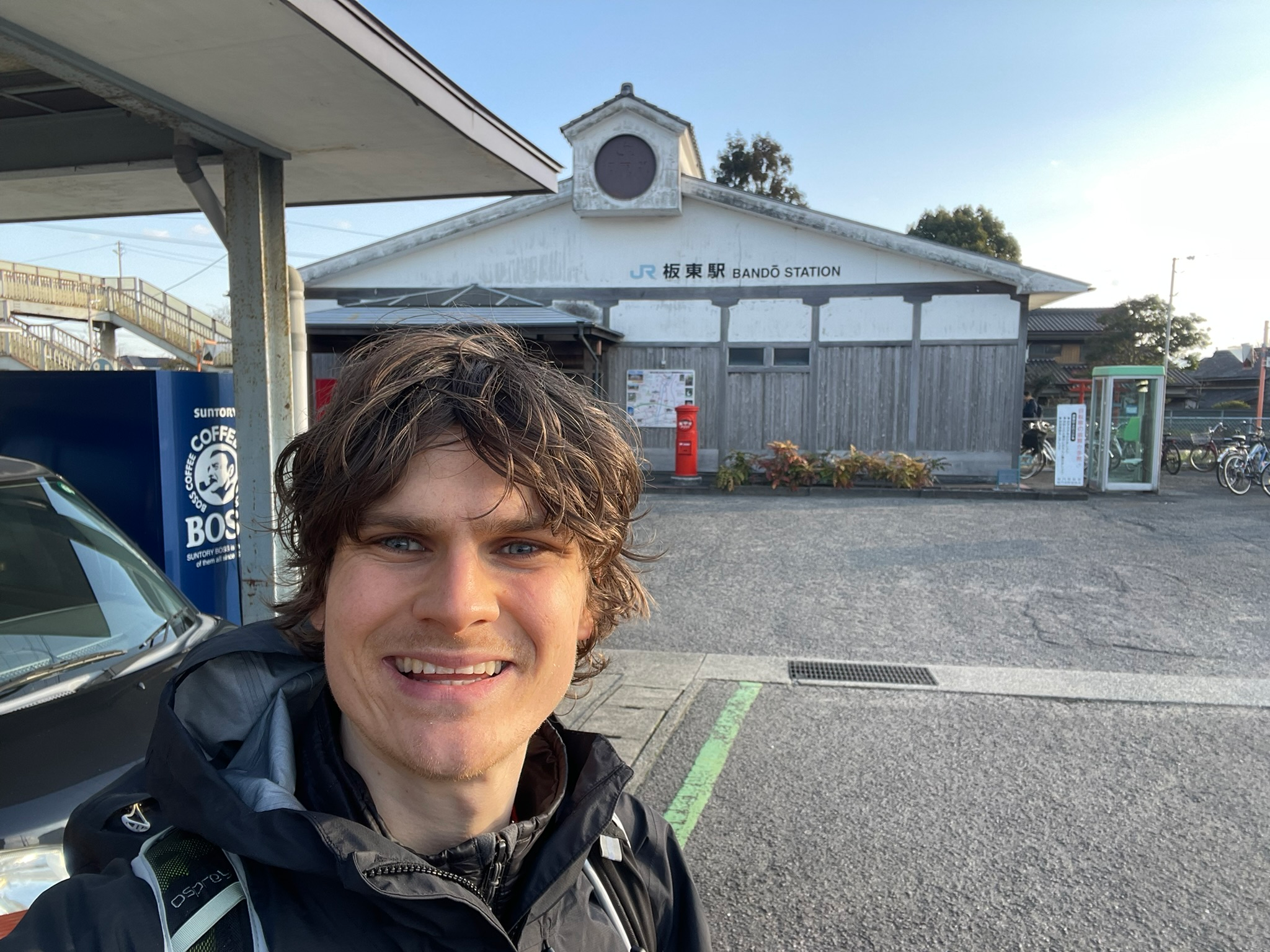
On the bus, I asked the guy sitting opposite me whether he had any recommendations regarding places to eat in Tokushima. He mentioned a couple of Udon restaurants that I could try. However, arriving in Tokushima, I felt slightly culture shocked, so I decided to buy some food from the 7-11 in front of the station. I took the chance to take some yen out of the ATM before hopping on the local train to Bando station, the station nearest to the first temple. The carriage was quiet, with a few commuters and school children dressed in uniform scattered throughout. Arriving at Bando station, what I was about to do really started to sink in. I contemplated finding a place to camp in a nearby park, but instead, as I planned on sleeping outside for the next couple of months, I decided to treat myself to the luxury of a guesthouse for the first night. I’d also been told to spend the first couple of days familiarising myself with what was and wasn’t acceptable regarding sleeping outside in Japan, so I didn’t fancy disrespecting anyone on my first night.
I walked into the Henro house and asked whether they had any space that evening. They told me to take my shoes off and to follow them upstairs, giving me a pair of tiny, slippery slippers to wear around the place. They showed me my room - a futon with a blanket bang in the middle of the room with a low table and a cushion to sit on the floor in the corner. Simple, just how I like things. I ditched my bags and walked to the convenience store up the road. Overwhelmed, I grabbed a few reduced ready meals from the refrigerated section. I found a bench beside the main gate of the first temple and sat there eating some cold noodles. I hoped that this wouldn’t be what I’d be eating for the next two months, but accepted that it would be fine if that was the case. After all, I was trying to dissolve my ego. I walked back to the guesthouse, wrote a couple of pages in my diary, before meditating and going to bed.
Waking up the next morning, I headed to the start of the pilgrimage with a couple of people staying at the guesthouse who were also setting off that day: Will from Australia, Eri from Japan, and Jay from Canada. We followed the green line along the side of the road to the temple’s entrance. It was a crisp morning, and I could certainly feel a different energy in the air of the first temple. I felt both nervous and excited for the weeks ahead, going in blind to what would be my first long-distance hike beyond a week. I guess time would tell how my mind and body would respond. Waiting for the other’s to partake in the temple’s trade affairs, I took time to pause and take everything in.
It’s usually customary to undertake the Henro with a few items to hand. Traditionally, people wear a white coat and a sedge hat, as well as carrying a wooden staff and a stamp book to collect a stamp at each temple. I decided not to purchase any of these items in alignment with my desire not to develop attachment to items nor be burdened by material possessions. Some may disagree with my viewpoint here, but as previously mentioned, there is no right or wrong way to undertake the Henro. Despite this, I did purchase name slips, which were little pieces of paper that I would offer at each temple and to anyone who gifted me something along the way. I also purchased a box of incense sticks, which I’d use during the rituals at each temple. I paid in cash, something that I’d have to get used to, as much of rural Japan still transacts using cash.
Leaving the first temple, we wound along the streets of suburban Tokushima between the first few temples, taking it steady to ease ourselves into things. Shikoku is broken into four prefectures - Tokushima, Kochi, Ehime, and Kagawa. Each prefecture is considered a different stage in the journey of a Henro, with the twenty-three temples of Tokushima representing the idea of awakening. Awakening to what, I did not know exactly; however, I was ready to experience some real inner battles over the coming days, and expected to start awakening in some capacity, even if incredibly subtle.
Soon, a couple of the other pilgrims were already thinking about what they could send home to lighten their loads - the Japanese heat and hard surfaces proving to be a challenging combination from the off. We’d planned to stop at a bakery indicated in the guidebook for lunch; however, upon arriving, we realised that it was closed on that particular day, so we had to make do with convenience store food once again. Shortly after the fifth temple, it was time for me to take a detour up a small mountain to the first of twenty Bakkaku temples. I said my goodbyes to Jay, who said that it was a little sad to have to say farewell to each other after such little time, but I assured him that the coming and going of pilgrims into one’s lives was an important lesson in understanding the transitory, ever-changing nature of life. Climbing the mountain, I started lengthening my stride a little as I passed alone along dry hillsides, certainly feeling the difference in heat and humidity compared to back home. I was weary of snakes in the long grasses underfoot and worked a heavy sweat on the uphills, wanting to make sure that I could drop down the mountain before dusk. I passed another Aussie who said that she thought the pilgrim attire looked silly during our brief exchange. Such judgement, I thought to myself, despite somewhat agreeing with her.
Alone at the temple, I began my rituals for the sixth time that day. Entering under the main gate, I stood to the left and bowed once, hands together to ward off evil spirits. Then, I washed my hands and my mouth under the tap to purify myself and rang the gong to mark my arrival, before writing my name on a name slip. The sound of the gong reverberating through the temple grounds never failed to move me, making me feel like I was being moved from the inside, too. I then walked to the main hall, lit three incense sticks, and made a small donation before putting my slip into the box and bowing once more. Then, I opened my guide book, where I’d read a series of passages, including the Heart Sutra. Following the chanting, I’d repeat the rituals at the Dashi hall and then return to the main gate, bowing once to the right of the gate on my way out.
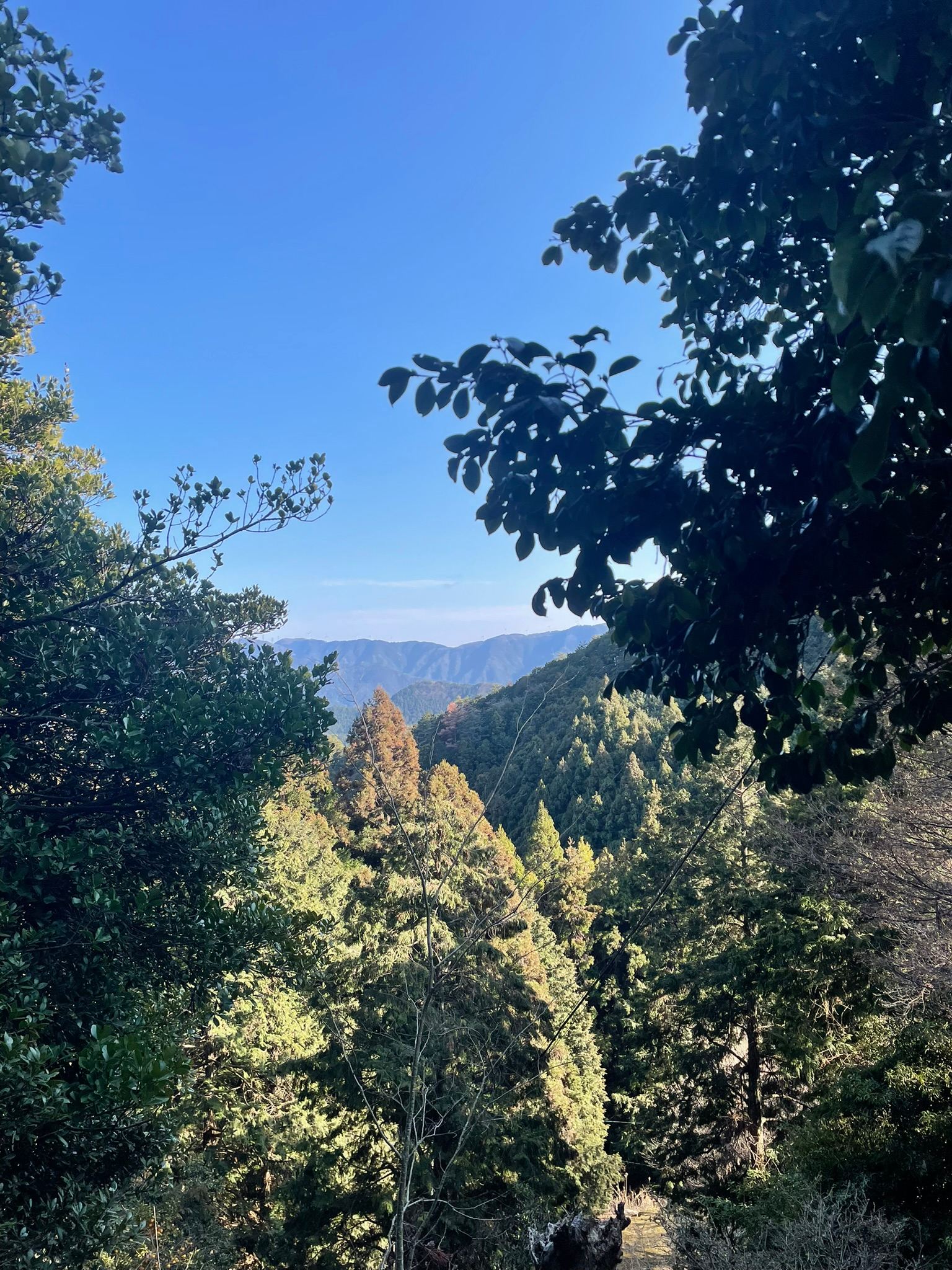
The walk down from the first Bakkaku temple was the highlight of the first day, with the sun beaming on my face as it set, the birds singing their birdsong. I was happy that I’d decided to detour to the additional temples, as my efforts already seemed to be paying off, rewarded with panoramic views overlooking Tokushima. Losing light, I left the forest trail and started meandering along the roads of Tokushima’s suburbs, arriving at the sixth temple in the dark. I hoped to potentially stay at this temple; however, upon arriving, a fellow pilgrim had already set up camp in the room available under the main gate. Feeling chillier than expected, I pressed ahead, following the beam of my headtorch, to a spot that I’d promised earlier that day to Eri that I’d be camping there that night.
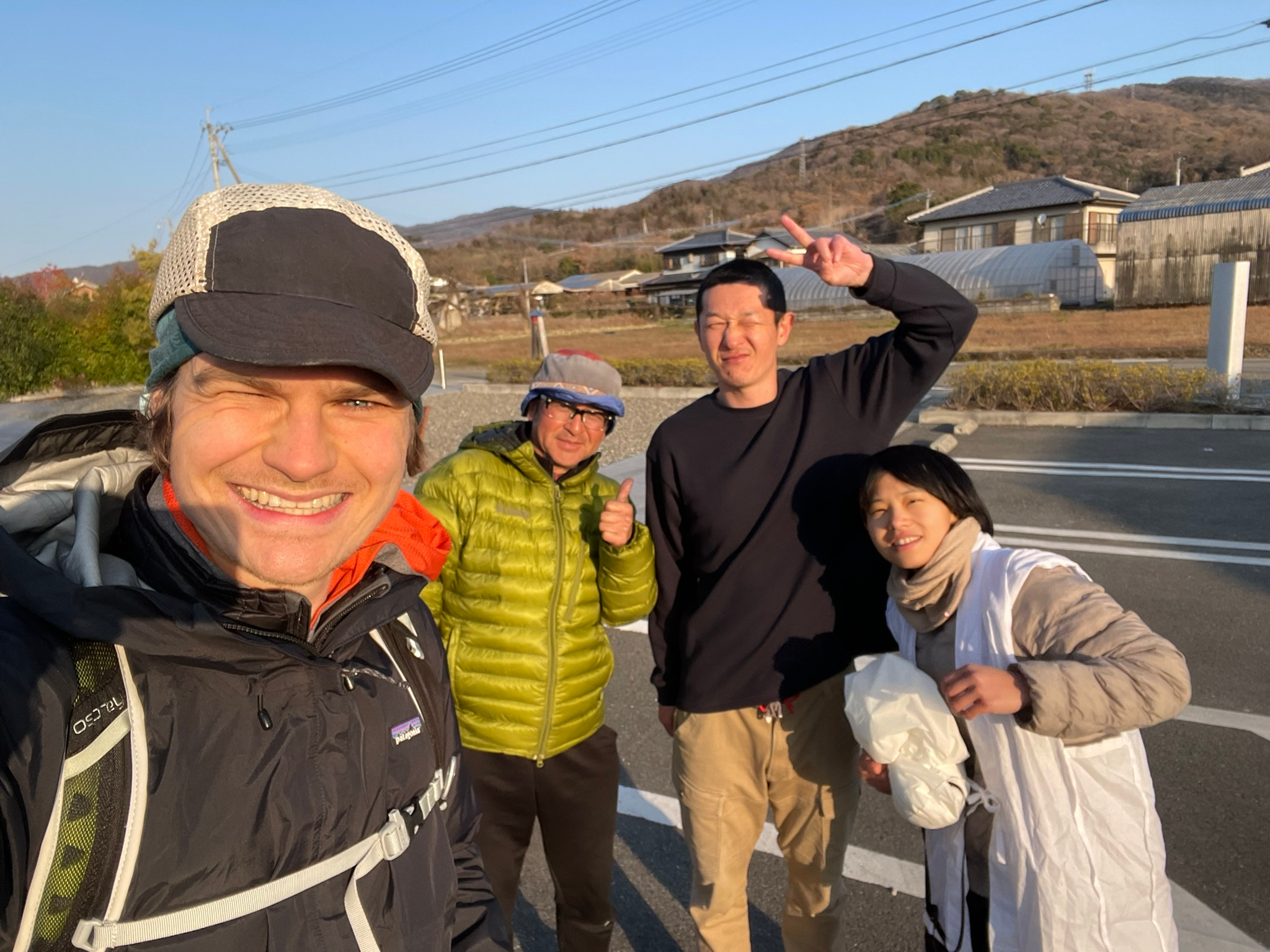
Approaching the rest of the huts, I could see that there were three others who were already settled in. I set up camp behind the rest hut to shelter from the cold wind and enjoyed sharing stories with Eri-san, Wataru-san, and Amano-san. I laughed along with them as they spoke in Japanese, the limited Japanese lessons that I did before heading out coming in more handy than I thought they would. Wataru was cycling the Henro, riding a cool-looking Japanese bike decked out with pannier bags full of kit. Amano was walking, like Eri and me, having stopped working to do the pilgrimage. The first night was colder than expected, but I knew that it would only get warmer as the seasons changed from Winter to Spring.
Waking up the next morning, I was keen to get moving - a combination of the coldness and eagerness to arrive at the next temple in the early morning light. I asked the others what their plan was. Wataru and Amano were headed to the Onsen for the day, and Eri was going to set off slightly later on. Because I wasn’t collecting stamps at the temples, I didn’t need to arrive between the temple office opening hours, these usually being 8 am - 5 pm. This gave me more flexibility to start walking earlier and to continue later into the day, these being my favourite times of day to be moving in nature.
The eighth temple, Kumadani-ji, was the most peaceful yet, having arrived before it was busy. I then made my way to the tenth temple, via the ninth, in front of which I’d been told there was a shop where one could buy handmade sedge hats to protect themselves from the rain and sun. These hats were supposedly of better quality than the ones sold beside the first temple, so I was happy to wait a day until I bought one. Along the way, at Hōrin-ji, I met an older Henro called Shen-san. He was in his 70s and was cycling the pilgrimage in sections, taking the train with his folding bike to nearby stations and connecting the dots to the temples on his bike. Like many Japanese, he looked far younger than his age, and I was blown away when he started talking about all of his crazy bike trips that he was still doing today. A few years prior, he’d cycled from London to Edinburgh in under a day, and four years ago, he cycled 1000 km around Shikoku in only four days! We enjoyed talking and took a picture together whilst enjoying some dried sweet potato that I’d brought from the honesty box beside the temple.
Next, I headed to the shop to see if they had any sedge hats that I could buy. I’d not planned on buying one, but the intensity of the midday sun meant that I desperately needed something that would provide more cover than my small running cap. I was in and out in 10 minutes, leaving with a dome-shaped bamboo hat atop my head. For the next few hours, the walking was exposed, passing along the flatlands in the wide valley surrounding Tokushima. Taking a detour to use a porta-potty in the middle of some fields, I was gifted some water and a strange-looking energy drink in a small glass bottle by a couple of lovely Japanese farmers. Confused as to what the drink was, I stashed it in my pocket as something to be drunk only in an emergency. I soon crossed the big river before starting a gradual climb up to the eleventh temple. At the bottom of the climb, I picked up a bamboo staff from a box full of staffs for pilgrims to use. Perhaps this was an indicator of the difficulty of the climb ahead.
The eleventh temple lay at the bottom of what was notoriously known as the most difficult day of the Henro - the day with the biggest climb of the traditional route, from the eleventh up to the twelfth temple, Shōsan-ji. Aware of this, I decided that I would only push halfway up the mountain in the afternoon, as I did not want to be caught at nearly 1000 m in the cold and rain. This meant that I only had a short stint left to do for the day, so, before entering the eleventh temple, I visited one of the nearby hostels that also served as one of the Henro information points. I wanted to double check with them whether there was anywhere that I could sleep half-way up the mountain.
Opening the door, I took my shoes off before asking in very broken Japanese whether there was anywhere I could sleep on the mountain tonight. The lovely lady answered in perfect English, and the man, who sat at the table eating his lunch near the reception, decided to join in on the conversation. His name was Hideki-san, and he proceeded to tell me to sit down before returning with a plate of salad, tomatoes, and tofu for me to eat for lunch. I was incredibly grateful, for I’d incorrectly assumed that there would be somewhere for me to grab some food before ascending the mountain, so I was running on an empty stomach. We talked for a while. Initially, I thought that he worked at the hostel, but it turned out that he was a journalist from Atami, completing the pilgrimage at a slow pace, walking for half of the day and working remotely for the other half. We practiced some Hiragana and Katakana together on the whiteboard on the wall above the table before saying our goodbyes.
Leaving the hostel, I passed through the eleventh temple, making sure to top up my water supplies before walking for a couple of hours to where I hoped to stay for the night. The lady at the hostel said that there was a hut mid-way up the mountain that pilgrims could stay in. Given that there were boars roaming around the area, I liked the sound of a hut for the night, so I decided that I’d hedge my bets in being able to sleep there. Climbing, I quickly warmed up and was soon dripping in sweat as I lugged what now seemed to feel like a bag of bricks up the trail. I stripped off as many layers as possible to help stay cool and put my staff to good use, using it to help push me uphill. Not long after, I dropped a little downhill before seeing the hut perched beside the trail - Ryusuian rest hut. This was luxury - a wooden hut that even had some doors and windows! It was still only 4 pm, but I knew this was too good an opportunity to pass on and that pushing over the top was too ambitious. I unpacked my stuff in the hut before switching into my sandals and wandering up and down the pass to try to find a restaurant to eat dinner. I’m not sure what I was thinking, but it turns out there wasn’t anywhere to eat nearby, so I gave up and accepted that I’d go without food until lunch the next day. This was OK, as part of the pilgrimage was about learning to suck things up and get by with less. I knew that I wouldn’t go hungry.
That night, I spent my time lying on the floor of the cabin and doing some writing in my diary. It felt nice to be somewhat in the wilderness, disconnected from everything. Life felt simple.
Waking up, having spent the night feeling like Henry Thoreau sleeping in a cabin halfway up the mountainside, I set off on the second half of what was known by pilgrims to be the most difficult ascent of the pilgrimage. Atop the mountain lay the twelfth temple, which I reached early in the morning. It was peaceful, and the unseasonal snow made it feel like a winter wonderland. However, with my hands starting to get cold from my lack of gloves, I soon headed down the mountain. In my haste, I rolled badly on my ankle, letting out a small screech when it happened. Potentially sprained, I felt like things couldn’t have gone any worse. I thought that my ankle had fully recovered since I sprained it last summer, but my lack of strength work was coming back to bite me. Carrying extra weight meant that my ankle had really been strained this time.
On my way down, I bumped into Shen-san walking up the road to the temple. I told him that I’d rolled badly on my ankle, and he brought us some pickled plums to share from an honesty box, explaining that they were great fuel for cycling. They were unlike anything I’d tasted before - extremely sour with a slight underlying sweetness. I’m not sure I could eat many of them in one sitting. We shared this precious moment together and he asked to take a selfie on his camera to show his cycling friends when he would next see them. As I continued hobbling down the mountain, my ankle became stiffer, so I wrapped my buff around the swelling and continued making my way down to the valley. At this point, I started accepting that I’d maybe have to call the pilgrimage off after only three days of walking.
Combined with the ankle, I was starting to feel a little low on energy, and my mood was not the best. I’d hardly eaten for a whole day by now - only a couple of pickled plums and the strange energy drink that I was given the day before - and was hoping to find some food in one of the villages in the valley. However, everywhere I passed that was marked on my map as a shop was either closed or did not sell food. I accepted that I might have to go another few hours without food. But, my low morale was soon lifted when I happened upon a small shop run by a lovely Japanese lady whose name I ashamedly do not remember. After struggling to understand what things were due to my limited Japanese reading ability, I bought some food, and the owner kindly heated some things up for me in her kitchen, even giving me some steamed broccoli as a gift to have with my rice. By now, I was starting to understand one key aspect of the Henro - the concept of Osettai.
As a Buddhist pilgrimage, the Henro has many associated traditions related to aspects of the Buddhist philosophy. One of these is the concept of Osettai, which means giving gifts with no expectation of receiving anything in return. An important life lesson, but one that can only really be understood if put into practice. During the first couple of days in Shikoku alone, I’d received many gifts. Often small, from tangerines to bottles of green tea, they are a way for the giver of the gift to develop good fortune for their good deeds - the law of Karma, if you like. There is no monetary exchange involved and, instead, a pilgrim offers a name slip in return for the gift in order to create a continuous loop of good faith. Over the coming weeks, I’d realise how powerful such a small act can be, proving as beneficial to the giver as to the receiver.
Leaving the wonderful shop behind, I pressed on for the final handful of hours of the day, where I’d stay at my first Tsuyado of the pilgrimage. Along the Henro, there are various types of accommodation. My plan was to sleep outside every night, occasionally making the most of the different donation-based lodgings available along the way. One type of lodging are Tsuyados, which are simple lodgings on the grounds of some of the temples. Having done some research before heading out, I’d marked the temples that had Tsuyados in my guidebook. That night, with the help of the lovely shop owner I met at lunch, I managed to book myself a spot in a temple’s Tsuyado. As promised earlier over the phone, I arrived around 6 pm, feeling like a broken man. My body was aching, and my ankle was in a lot of pain. Entering through the temple’s main gate, I looked out for something that might resemble a Tsuyado, but I struggled to find it at first, wandering around the grounds and out of the back, ringing a doorbell of what must have been a local’s house, before finally stumbling upon the small hut. I opened the door and was happy to see that there were no other Henros there, given its small size. I unpacked my bag and wrote in my diary: “ankle is very bad. I can’t even do child’s pose”. I was out of food, but luckily, like many places in Shikoku, there was a convenience store just around the corner for me to grab some supplies for dinner and breakfast. I set up my bed in the Tsuyado and fell asleep soon after sunset. This would become the norm during the pilgrimage, working with nature’s cycles and rhythms, falling asleep as the sun set, waking up as it rose.
Having had the best night’s sleep so far, I felt pretty good within myself upon waking, deciding that the least I could do was to be positive and hopeful that things would improve. Before leaving the temple, I had one last thing to do. Conveniently, the temple at which I stayed, Ido-ji, also had a very old well under the roof of one of the huts. According to my guide book, this well was dug by Kūkai - the monk that the pilgrimage is associated with - with a stick, and if one made a wish above the well under the Hikagiri Daishi, then this wish would come true. So that’s what I did - I wished for my ankle to heal so that I could continue walking the pilgrimage.
Leaving the temple early that morning, I could feel the sun warming my stiff, cold body as I walked towards the mountains surrounding Tokushima. Passing another 7-11, I overtook a veteran pilgrim, Kuse Naoki. Having returned home and flicked through the National Geographic piece that inspired me to undertake the Henro, I later learnt that he’d been diagnosed with cancer around ten years ago and given five years to live. It is inspiring to see that he is still alive and healthy, attributing his “survival to his training as a yamabushi, an ascetic mountain monk who seeks enlightenment through physical exertion and immersion in nature”. This, I am not surprised about, myself also realising the importance of nature immersion. When I first passed him, I noticed that he was a man of few words, but that his demeanour was calm and poised. This continued throughout the pilgrimage as we yo-yoed each other back and forth countless times. Now I understand why - he knew the power of using the Henro as a way of going inward, to self-transcend and that there’s no need to speak simply for the sake of speaking.
For the rest of the day, I continued working my way through Tokushima’s suburbs, being gifted a handmade sticker from the owner of a cafe called Koso Labo before walking through long indoor shopping malls to shelter from the sun and have a restbite from the busy roads. I walked for a little while with a pilgrim in his late 60s, who was hoping to complete the pilgrimage in 26 days, requiring that he walk a marathon every day. He was a great man, but seemed to be walking in a rush at all times, not taking the time to stop and look at the map for directions, and running to make the traffic lights before they changed. I wondered to myself whether he was truly immersed and present in his surroundings, or whether the Henro was, instead, a ticking the box exercise. It would be a shame if so.
Arriving at what would be my last temple for the day, Tatsue-ji, I felt both extremely grateful and some slight turmoil. Coming to Japan, I planned to use the pilgrimage as a way to get back on track with some things, as I’d caught myself letting my overall health slide a little. The conundrum arose, however, when it came to food. Undertaking a Buddhist pilgrimage, I wanted to live as close to a monk as possible. An element of the monk’s life is accepting whatever food is offered to them. As osettai was common practice around Shikoku, I was often gifted food that I perhaps wouldn’t choose to eat back at home. After a handful of days, my ego started to become frustrated, as I often ate highly processed foods that I’d been given as gifts. I was hungry, so it seemed non-sensical not to eat the snacks I was given, and I knew that this component of my ego was in fact a Saṅkhāra that needed to be irradicated during the Henro. This was one of many that would surface during my trip.
Picking myself up again after a morale dip, I enjoyed taking the small country roads to Maegawa Campsite - a free community-run campsite that I planned to stay at that night. With a couple of hours of walking left for the day, I bumped into another Henro. Given that I was walking the Henro alone, with no SIM card or entertainment, I always tried to jump upon any opportunity to talk to other pilgrims. Oftentimes, seeing someone ahead of me, I’d pick up my pace a little until I caught up with them. Nakamichi-san was an 80 year old, recently retired lecturer of Biology, undertaking the Henro for the first time. Having been walking all day, he was struggling and said that his feet were already in bits. I told him that he was moving well, not needing to worry about anything. I then asked him why he came to do the Henro, just as I did with everyone I met. He said that he’d wanted to try it for a while, as a challenge of physical and mental endurance, knowing that the most difficult part of the journey was having to carry everything on your back. That evening, he had booked a Henro house to stay in - these being lodgings specifically for pilgrims along the route.
We stopped to go to the toilet, and as I needed to grab some things from the shop, we nipped into the small shop to grab some food. For the last forty-five minutes, I carried his shopping to lighten his load. Arriving at the guesthouse, he asked the owner where the local campsite was. The owner proceeded to give me directions, telling me to follow the road for 200 m before hanging a left down to the bank of the river. I followed his orders, but was rather underwhelmed when I arrived at what I initially thought was the campsite. Hungry, I took off my bag and sat on the sand bank to eat my dinner. About to pitch my tent, I decided that I’d scout out further along the bank just to double-check whether there was a better place to camp. Turning the corner, I was delighted to stumble upon some huts with fire pits and a toilet block. This was the actual campsite!
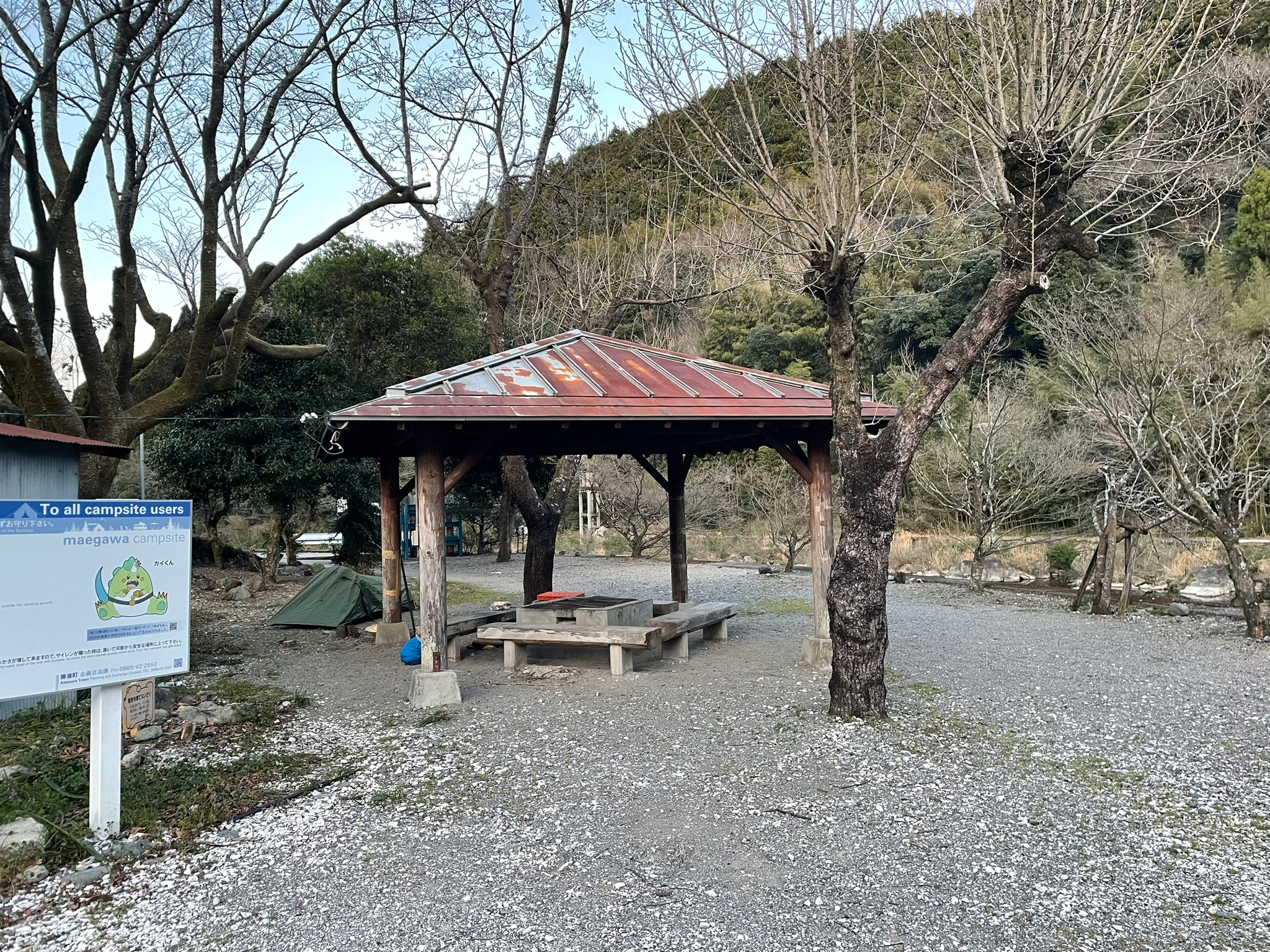
That evening, I pitched my tent before collecting some firewood from the river’s banks to start a fire in one of the pits. With a fire burning, I felt a deep sense of gratitude to simply have some warmth for the night. I sat there, daydreaming for a couple of hours, reflecting on the start of my pilgrimage, thinking about the enormity of the challenge ahead. Tired, I soon headed to my tent, falling asleep to the sound of the river meandering its way along the valley. I knew that the next day would be tough.
Waking up with the sun once more, I wanted to get going pretty quickly as I had another detour to do to the next Bakkaku temple. This time, it was atop a mountain, requiring a morning of walking to complete the out-and-back loop. I’d planned to stash my bag somewhere so that I could lighten my load and get the legs moving a little.
Rural Japan is both interesting and, at times, disheartening. Over recent years, the population has slowly been ageing and declining in rural areas like Shikoku, as young people are moving into the bigger cities - I suspect, as there are better job prospects and supposed ‘quality of life’. This made me feel sad at times, as I’d already seen how beautiful and peaceful the countryside was, and the sense of community in these small villages is something that a city simply cannot compete with. As a consequence of this depopulation, many houses are left empty to become abandoned, slowly degrading in nature. This also meant, however, that there were always old derelict buildings nearby, which were perfect spots to stash my rucksack behind when I wanted to walk an out and back.
Having found an old ivy-ridden building to hide my bag behind, I started walking up the mountain. Without the weight of my heavy rucksack, my legs felt light and springy, and I enjoyed climbing slowly and winding my way through the villages scattered along the hillside. Arriving at the temple, Jigenji, I sat down in the shade to cool down out of the heat before asking the lady at the temple office how I could get to Ana-zenjo, a cave used for training by Kūkai. Unfortunately, she said that the cave was closed that morning, and that I wouldn’t be able to get through the gate to walk the steps up to Ana-zenjo. I felt a slight disappointment as I’d looked forward to visiting the cave; however, in line with one of the pilgrims’ oaths, I tried not to complain when things didn’t go as planned.
Picking my head up, I took in the views before making my way down to a part of the mountain used for waterfall training - a type of physical training used by some monks, where they stand beneath a waterfall for some time to strengthen the mind. I climbed a long, steep staircase to the waterfall and, given the lack of monks present that morning, tried to imagine what the training would look like on a different day. I then wound my way down some switchbacks to a bridge crossing the river before turning back on myself to start walking back to my bag. On my way back, while passing through a small village, I said ‘ohaio gosaimasu’ to a local lady and, when she realised I was a Henro, she shouted for me to stop and handed me a few oranges as osettai. Hungry once more, I was very grateful for this gift, and they proved to be some of the best oranges that I’ve ever tasted.
Arriving back at the derelict house, I was glad to find my bag where I’d left it. As I’d planned a little when at the shop the day before, I’d brought enough food to have for lunch that day. I walked to find a bus stop to use for shelter, before eating a super salad to fuel me for the rest of the day. After surviving on convenience store ready meals and rice for the first few days of the pilgrimage, I decided that my body would not last much longer if I didn’t change what I was eating. I know how important the fuel I put into my body is in terms of recovery and I was starting to clock bigger and bigger days, so eating well would help a lot with my overall mood and recovery. After messing around with different meals, I landed on a good, filling lunch that seemed to keep me going all day. I’d buy a big bag of mixed salad leaves, throw in some tomatoes, boiled beans, avocado, nuts, and raisins before drizzling quite a lot of extra virgin olive oil on top and shaking the whole bag. It felt good to get lots of colourful stuff into me, and I certainly started noticing the difference in my energy immediately.
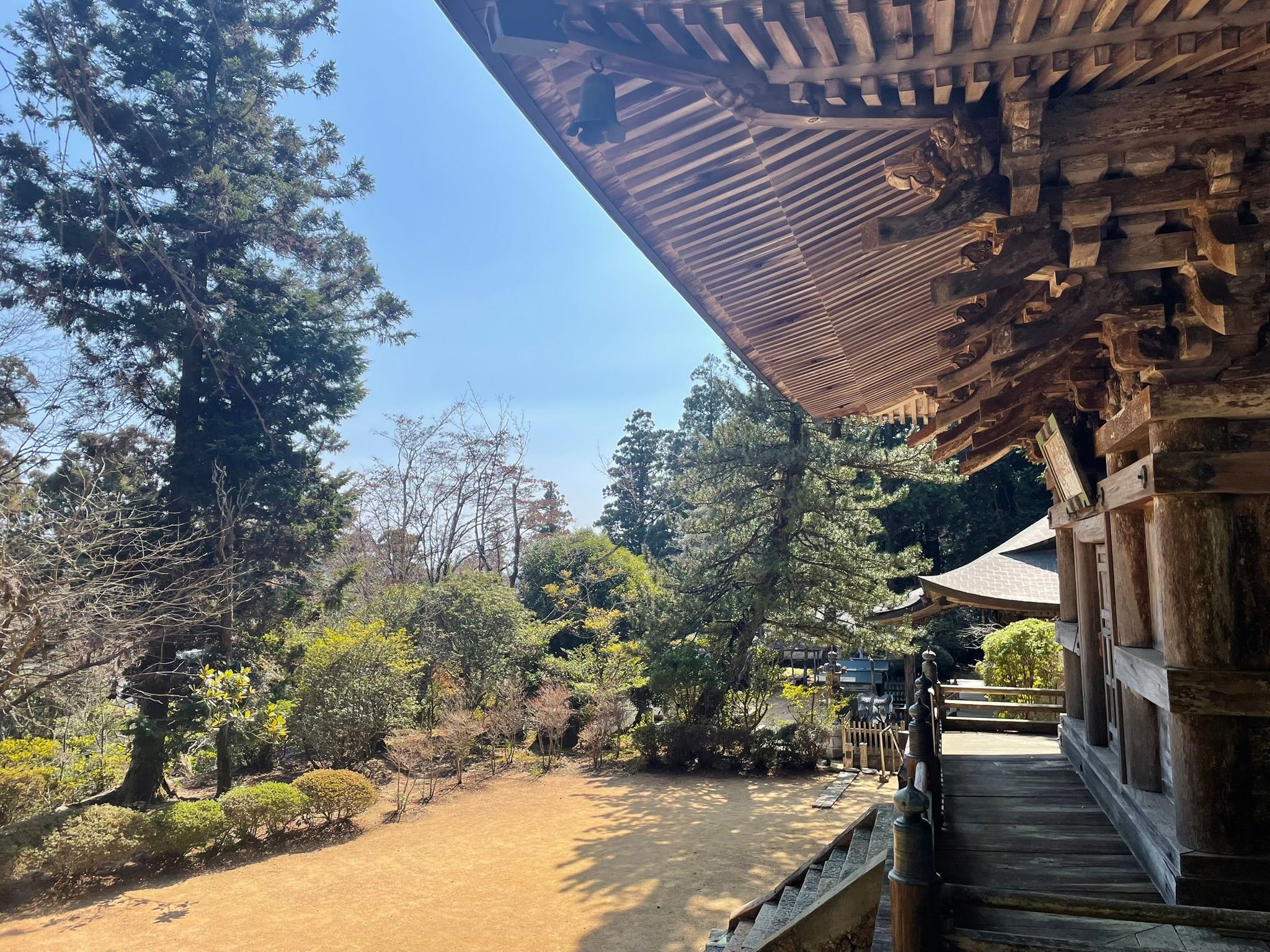
Having eaten my lunch, I pressed ahead with the rest of the day. I was nearly halfway relative to where I planned to stay that night, but the next few temples were on top of some big hills, so I knew that things would be slow going. The climb up to Kakurin-ji was incredible. Short but punchy, I felt tremendous energy flowing through my body as I pushed up the hill in the heat. The trees hugged the side of the hill, and I soon hit a ridge-like path with trees on both sides. On my way up, I could see a runner power-hiking, so I decided that I’d push a little to catch up and talk to them. They lived nearby and were on a training run. She gave me a couple of snacks as osettai, and we talked for a little while on our way up the hill. Her smile was infectious - like many Japanese people - and gave me some extra energy to make it to the temple. Arriving at the temple, the level of tranquillity was above any I’d experienced up to now on the pilgrimage.
In Japan, temples are often taken care of very well. What this also means is that many temples have a relatively new energy and feeling to them, as the buildings are regularly maintained, repaired, and painted. What I liked about Kakurin-ji was that it seemed to have preserved some of its original woodwork, with the facades and overhanging roofs showing signs of weathering, having stood strong and welcomed many pilgrims for hundreds of years - helping them awaken as they neared the end of Tokushima’s twenty-three temples.
After soaking in the energy at the temple, I sat down to eat a banana or two before making my way down the other side of the hill towards the valley that stood between the twentieth and twenty-first temples. The downhills were starting to take their toll on my legs that day, but I knew that the tiredness wasn’t something to worry about - it was part of why I was here, to explore how my mind responded to fatigue and physical pain. Hitting the road on the valley floor, I saw Wataru-san - the cycling Henro that I met on the first day - working hard, pushing his bike up the steep roads hugging the hillside. I wished him good luck and thought to myself that it must be an incredible challenge to undertake the pilgrimage on a bike, as many of the climbs were too steep to cycle with a bike loaded with camping kit, meaning that pilgrims would often be pushing their heavy bikes alongside them. Crossing the valley, I was happy to only momentarily be in the mid-afternoon sun, soon hitting a narrow road shaded by the tree canopy that led me to the bottom of the next big climb.
By now, my body was starting to adapt to the long days of walking. The initial shock seemed like it was fading away, and my legs were becoming stronger. Despite being in good shape before coming to Japan, there’s little you can do to fully prepare for hiking with everything you need to live on your back for such a long time. However, I was now starting to really enjoy the challenge that the climbs had to offer, finding myself being able to get into a flow as I took long strides uphill - feeling my legs working and burning as they carried me up the mountains.
Passing an older Italian couple, I soon bumped into a local man who was out walking for the afternoon. He carried what looked like a shopping bag full of groceries, and must have been in his 70s or 80s. I was impressed by his speed uphill and started talking to him. He quickly asked where I was staying that night, and offered for me to come back to stay at his house. I asked if he lived along the Henro, and he responded saying that he lived around 30 km away, close to the coast. Wanting to complete the pilgrimage as traditionally as possible, I politely declined his offer, saying that I planned to find somewhere to stay along the route, a few hours’ walking away. We continued talking before he came out with some strange remarks about the size of British people’s penises, wanting to make it clear that the cold would certainly affect things. Not knowing to think whether the man was strange or not, I picked up the pace again and said goodbye.
The climb was longer than I expected and, upon reaching the temple’s main gate, like many temples, a long set of stairs to the main temple grounds lay before me. But I also came to like these staircases, using them as a way to find a little more untapped energy before resting and bathing in the peace of the temples. Exiting the temple, I made my way along a beautiful path through the forest. Arriving at another statue of Kūkai, I paused to take in the vast landscapes. There was an almost 360 view overlooking most of the Tokushima prefecture. The island’s inland peaks rose high, still covered in trees all the way up to their summits - a contrast to Wales, where mountains have been over-grazed, the treeline having receded, bearing little resemblance to their natural state. I could see the coast that I would soon arrive at sometime during the next couple of days, and was starting to feel more and more immersed in the surrounding nature and habitat.
Hanging a right, I hit a ridgeline that would take me down the hillside before what I hoped to be the final section of the day to Byodo-ji, Awa. I was quickly losing light, but this time of day was starting to become my favourite time to walk. As the sun began to set, the temperatures dropped a little, making walking less strenuous. Wildlife started to become more apparent, as the wild boars roamed around and the birds started singing their evening melodies. It’s difficult to describe, but as dusk approached, I started to feel as if things aligned in a way that allowed for deeper reflection and introspection. Perhaps the fading of light made me think more deeply, the symphonies of nature allowing me to bathe in its teachings.
Losing light, I picked up the pace slightly so that I would arrive at Awa before it was completely dark. Hitting the tarmac roads once more, I felt tired and was having to work through some challenging things in my head as I followed what felt like the longest stretch of road yet. With the sun setting behind me, I arrived at the twenty-second temple before sunset and sat down to soak in the events of the day. I’d been on the move for around twelve hours by now, and was looking forward to finding a nice place to sleep. Feeling worse for wear, I decided that I’d try to see if one of the local guesthouses happened to have any spare rooms for the night. Strangely, the temple had Wi-Fi, so I logged on and looked for guesthouses that were nearby. There was one just around the corner, so I decided to check it out.
I walked into a room of Japanese Henro sitting around a table eating their lunch. Both Kuse Naoki and Nakamichi-san were part of the group, and the feast that lay in front of them looked incredible. I explained to the owner of the guesthouse that I was mainly looking for somewhere to eat, so I thought I would see if any of the guesthouses had availability and could offer meals. Unfortunately, they said that they were full that night. Whether or not this was the case, I do not know, but I had also not washed for a handful of days by now and was starting to look like an aged pilgrim. In wanting to help me, they offered to call a nearby guesthouse. However, this other guesthouse did not offer meals, so I explained to them that I’d try to find a shop instead, as I needed some food. Asking in broken Japanese whether Awa had any shops - “supermarket wa doko deska” - the owner said that he’d walk me to a small shop just ten minutes down the road. Walking to the shop, I asked the gentleman whether there was still a Zenkonyado in Awa, these being free lodgings offered by the Japanese to walking pilgrims. I’d pencilled in a number and a marker on my map before heading to Japan, but the sources I was looking through must have been outdated, as the man told me that they barely existed anymore, with there being only one in Tokushima prefecture. I accepted that things had clearly changed in the last decade and bought some bits for dinner, eating them sitting on a step outside the shop. The shop owner then came out and handed me a warm can of coffee as osettai, the best gift I could have asked for at the time - not because I wanted to drink the coffee, but because I was getting cold again and I’d figured that these small cans of coffee worked very well as heaters if you placed them down the front of your jacket as you walked.
After a break, I pressed ahead with the last stretch for the day. It was already dark, and I’d hoped to camp near Awa, but there didn’t seem to be anywhere appropriate to do so in my guidebook. Preferring to be safe and know that I’d have a place to camp for the night, I decided to walk an hour or so further up the Henro route to a camp spot below the walls of Fukui dam. With my dim headtorch light guiding me, I walked carefully along the winding country roads to the dam, turning the light off a couple of times to soak in the darkness and look up at the stars above. I felt calm and at peace, and knew that I’d sleep well that night. Arriving at the park below the dam, I pitched my tent, brushed my teeth in the public toilets, and slept like a log until dawn.
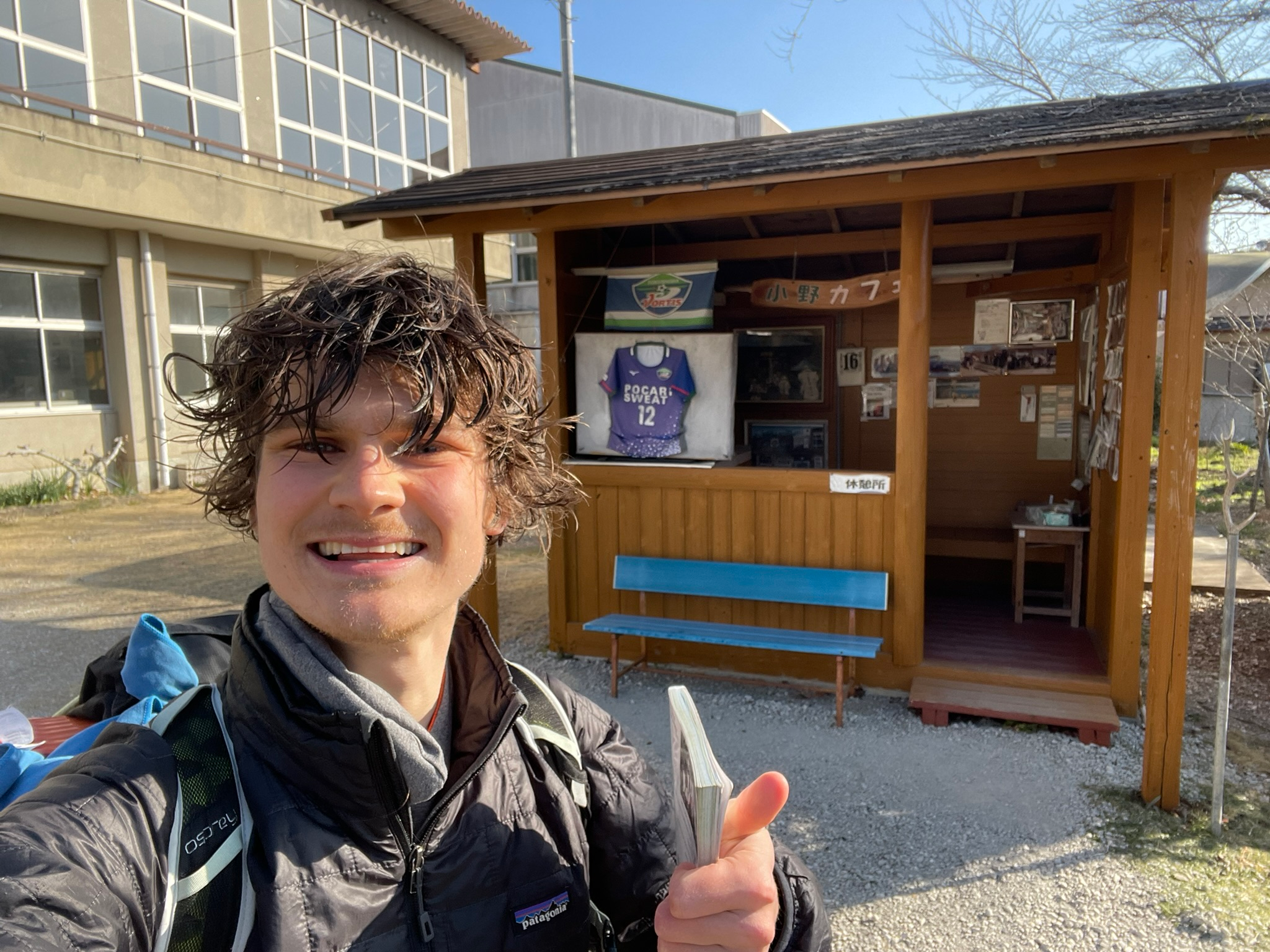
Waking up, I was excited for the day ahead of me. I didn’t have too long to go until hitting the coast and feeling the sea breeze. During the pilgrimage, I chose to take the scenic routes whenever possible, as I wanted to go more inward and have more time to disconnect from things. I meandered along the river before arriving at a rest hut near Fukuicho. But this was no ordinary rest hut. Inside, there were wall sockets for pilgrims to use, as well as a coffee machine to make some tea or coffee. The best part, however, was the showers that were in the changing rooms of an abandoned school beside the rest hut.
The local community had maintained a toilet block with showers for pilgrims to use on a donation-based basis. Having not washed for over a week, I knew that I needed to take this opportunity to clean my body and hand wash some dirty clothes. Leaving my bag in the hut, I headed to the shower, before washing myself clean as quickly as possible. I still wanted to respect the planet’s resources, so I kept the shower short - using it only to fully wash myself and nothing more. It would have been easy for me to take advantage of this resource, but I chose not to be greedy. Next, I handwashed some clothes in the sink using some of the soap available. I’d hang these clothes on my bag to dry in the morning sun. Leaving the village, I felt like a new man. I was clean and felt like my spirits were already higher. Today was going to be a good day.
The next stop would be on the coast, but I first had to climb over Kaitani Pass. The climb was punchy, but I was rewarded with incredible views towards Yuki. Even better, I was beginning to see the cherry blossoms appearing as the temperatures rose. I’d heard much about the Sakura in Japan during springtime, and imagined myself walking through the trees of cherry blossom during the Henro. This was now becoming a blissful reality.
Walking down the other side of the pass in intermittent rain, I couldn’t help but feel tremendously grateful and alive as I walked through the forest down to the sea. Arriving at Yuki, I passed straight through as there was no sign of any shops to stop for some food. Hitting Tainohama, I walked onto the long white beach and enjoyed listening to the sound of the waves and let out a “woooo” like I often do when I feel a deep sense of joy. On the far side of the beach, I bumped into two Dutch Henros that I’d briefly met a few days before and stopped to talk to them under the shade of a beachside rest hut. I gave them a kumquit each - a small Japanese fruit that look like tiny elongated oranges, but certainly pack a punch. They then gifted me a grapefruit that they’d carried from the guesthouse they were staying at. By now, many different fruits were approaching their peak season, with various citrus fruits growing in abundance along the Henro trail. I’d picked up the kumquits earlier in the day at an honesty box beside the road for 100 yen a bag.
After a short pause and snack, I carried on walking towards the next coastal town, Kiki. Up to now, I’d been choosing the scenic routes wherever possible, so I decided to do the same here. It didn’t look much longer than the standard route on the map, and I wanted to walk as close to the coast as possible. How wrong was I - this detour happened to be one with many punchy ups and downs and had little to no shade from the sun. The dry grass alongside the path also seemed like prime snake territory, so I was careful to look out for any friends along the way. However, just like all difficult sections I’d walked, I was rewarded with incredible views along the coast and was starting to see some interesting rock formations as I entered Muroto-Anankaigan Quasi-National Park. Feeling a little tired, but in good spirits nonetheless, I pushed on to the twenty-third temple, Yakuō-ji.
Walking along the streets of Hiwasa was completely different to walking down the streets at home. The sound of the birds tweeting atop the gables and pylons echoed around the narrow streets. The buildings were all fairly old, but this made me feel like I was certainly in Japan as I passed many small, independent shops before crossing the main road in front of the temple. Hungry, after soaking in the atmosphere of the temple, I went hunting for a supermarket. Despite preferring to support smaller shops, I was also aware that my body was being pushed close to its limits and would break down if I didn’t put good stuff into it. Supermarkets made it easier to find fresh fruits and vegetables as well as vegetarian protein options like beans, yogurt, and eggs. I asked a local where the nearest supermarket was and followed her directions. Very hungry by this point, I brought stuff to make another super salad as well as yogurt, fruit, nuts, and dark chocolate to make as a late breakfast. Like most days, I then sat outside the supermarket and used my small pocket knife to cut up some fruit and veg. After finishing eating, I was full to the brim, feeling heavy, but ready and well-fuelled for the long stretch ahead.
Leaving Hiwasa, I turned left onto the biggest scenic detour of the pilgrimage so far. The guidebook had written that this way was “hilly” with “superb views” and suggested that it would take around 7 to 8 hours to walk to the next village with amenities. Well stocked with nuts and yogurt from the shop, I passed Hiwasa Castle and started following the undulating trail along the coast. This was the most difficult yet rewarding section of the pilgrimage so far. The trail climbed up and down through seaside forests, with many viewpoints along the way to soak in the scenery. At one viewpoint, I bumped into a pilgrim from Luxembourg who wasn’t too chatty, but made me question my decision to press ahead for the day, as he seemed to know more about the difficulty of what lay ahead. Traversing the Semba Kaigai Cliff, the path then swung slightly inland and followed a windy ridgeline for a couple of kilometers. I felt free, but then became sad as I saw the remnants of deforestation work scarring the hillsides.
Wherever I go, humans’ impact and destruction never takes too long to stumble upon. I felt both anger and hope stirring inside me, as I knew that the pilgrimage would help solidify the path that I am on towards creating a better world, even if it is in the tiniest of ways.
With a couple of hours of sunlight left, I decided to press ahead along the trail towards the Minami-awa-sunline - a scenic road connecting Minami and Mugi, with views overlooking the Pacific. I pushed hard over the last hill, now drenched in sweat and getting thirstier, having already run out of water earlier in the afternoon. I dropped down through another cedar forest that provided a sensory experience that I cannot describe with words. The sound of the birds, the beams of light from the low evening sun shining between trunks, the feeling of the leaves beneath my feet. I wanted to be nowhere else. This was life.
Hitting the road, I quickly bumped into two Japanese men who looked like they were out on their evening walk. Their English was very limited, perhaps even more so than my equivalent level of Japanese, so we had to make do with using a select few phrases and words along with gestures to converse. They were concerned that I’d be cold that night and that I wouldn’t find anywhere to camp, but I assured them that my sleeping bag was warm enough and that I would be able to find a spot down the road, where my map indicated that there were some toilets. With the sun setting in front of us, we laughed as we walked down the sunline. They then walked me to a spot where I could camp, beside a car park with toilets nearby. I thanked them for their kindness and said that I needed to fill up my bottles with tap water from the toilets. Using Google translate, they said that the water was nasty to drink, and that a motorcyclist had fallen ill doing so. I’d been fine all week drinking toilet tap water, so I was willing to risk it if I needed to.
I sat down to eat some yogurt and nuts for dinner, and we talked about our lives - what we did for work, where we lived. They didn’t seem in any rush to walk back to Mugi before sunset and soon, another man turned up in his car dressed in a suit. He worked for the police and was as friendly as the other two. We were watching the sunset when another man appeared, having walked from Mugi with a bag full of water and green tea as osettai. I was lost for words and felt incredibly indebted to the two men whom I’d met, now knowing that their earlier phone call was one to ask someone to bring some fluids to me. They then quickly left, and I watched the light fade away, Cape Muroto in sight. Seeing the extent of the long coastal section ahead, I headed to my tent for some much-needed rest.
I slept poorly that night, being awoken by a few cars arriving at the car park late at night. One car sounded as if it was full of young adults who were having quite some fun. I’m not sure what they were up to, but they seemed to wander around the spot where I was camping for a little while before sitting in their car. I opened my tent door to peer and see what was going on, and decided that I was just overthinking things. I’d been safe up to now, so what could possibly go wrong?
The next day, I wanted to put in a big stint. Along Cape Muroto, there aren’t any shops for a good few kilometers, so I wanted to get as far along the Cape as possible so that I would leave less to do on the second day, allowing me to find some food sooner. I passed through Mugi, arriving before the shops opened, and continued along the coast. I must have been tired that day, as I remember very little from the morning other than walking through Awa-Kainan trying to find some food and Wi-Fi.
Before heading to Japan, I’d applied and been interviewed for a couple of PhD positions to start in Autumn and expected to hear back from them around a week into my pilgrimage. This was mainly why I had my phone, so that I could check my emails and respond to any offers if I was lucky to receive any. Logging into the Lawsons’ Wi-Fi, I was delighted to see that I’d been offered places on both programmes that I’d applied for. I felt very grateful and happy that I now knew what I’d be doing next, but also found it difficult to contemplate things seriously and knew that I needed to properly think about which PhD I’d like to take. I had a day to think long and hard about things, but I think my gut knew what to do anyway.
Just after midday, I caught up with two German pilgrims. They had just finished school and decided that they wanted to hike the Shikoku Henro. I admired them for choosing to do something like this to test their minds and bodies. Their bags were big and looked heavy, making it an even more impressive feat. They said that I should press ahead as I was quicker than them, but I explained that I always sped up to catch up with other Henro whenever I saw any. We walked together for a good hour before going into a small cafe to eat some lunch. This would be my first meal out during the trip.
We sat outside on the balcony overlooking the Pacific and talked about life. I then asked the waitress, Saukui-san, whether I could charge my phone somwhere as I wanted to make sure I had battery to join some video calls somewhere later that day. Not knowing where I’d camp that night, needing WiFi for the calls, I looked at the map in the guidebook and decided that I’d keep pushing further along the coast for a few more hours to a cheap campsite called Rider’s Paradise. The Germans had heard about it and said that it looked good, so I kindly asked Saukui in Japanese if I could use her phone. She was incredibly kind and hospitable, calling the campsite for me to make a reservation and even complimenting me by saying that I had “beautiful legs”, which I appreciated given that I looked pretty scruffy by this point. I paid my bill and said goodbye, being given a snack as osettai to keep me going for the rest of the day. I set off alone again, the Germans having left before me.
Soon after, approaching a town called Kannoura, I crossed the boundary into the next prefecture along the Henro - Kochi prefecture. My time awakening in Tokushima had come to an end. Now it was time for ascetic training, with the temples of Kochi representing austerity and discipline. Having still barely dented the pilgrimage, was I ready for what lay ahead?
I hope you enjoyed reading this first post about my pilgrimage in Japan. If you reached here, then I’d love to hear what you thought as I might try to craft this, along with my writing about the rest of the trip, into some sort of book. My hope is to write authentically, describing things as they happened. The first week was reasonably gentle, but things started to get more interesting the further I went. I’m exctied to share the next piece of writing about Kochi!
Ultimately, this is a personal account for me to look back on and recollect my time in Japan.